Research
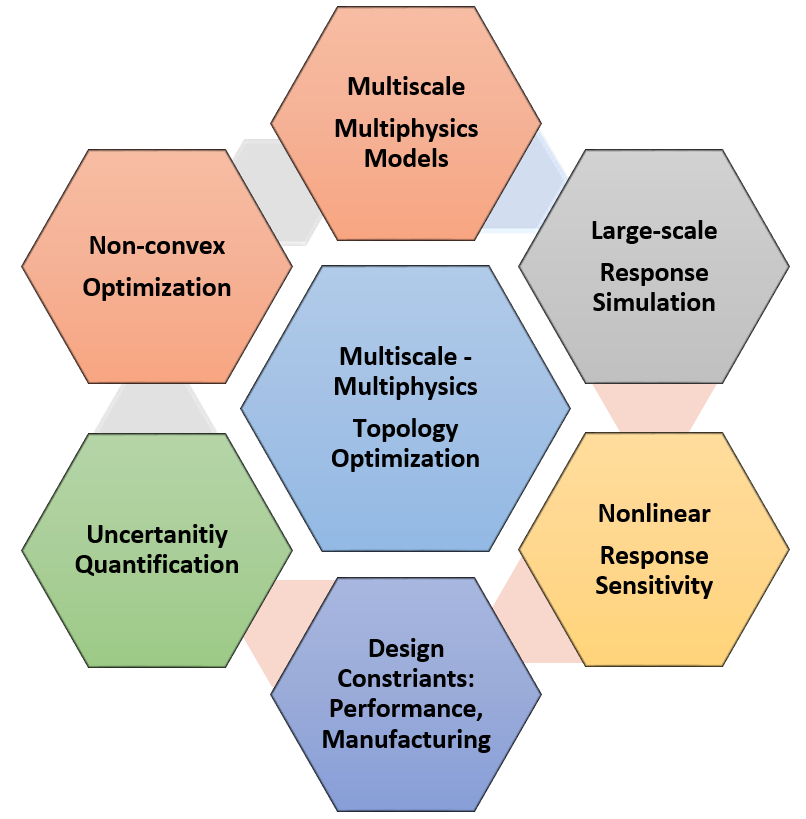
Multiscale Multiphysics Topology Optimization
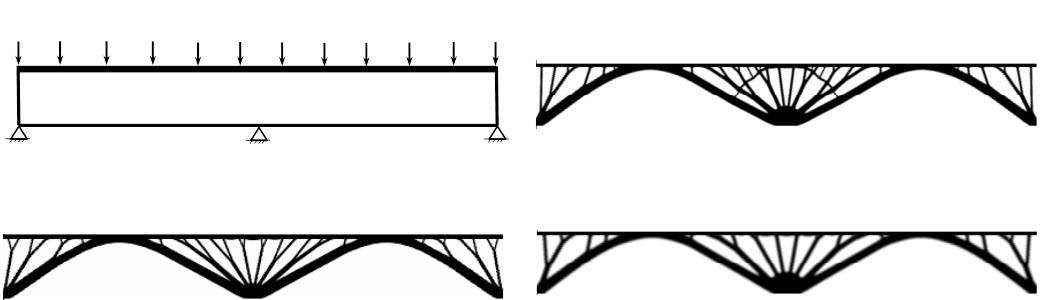
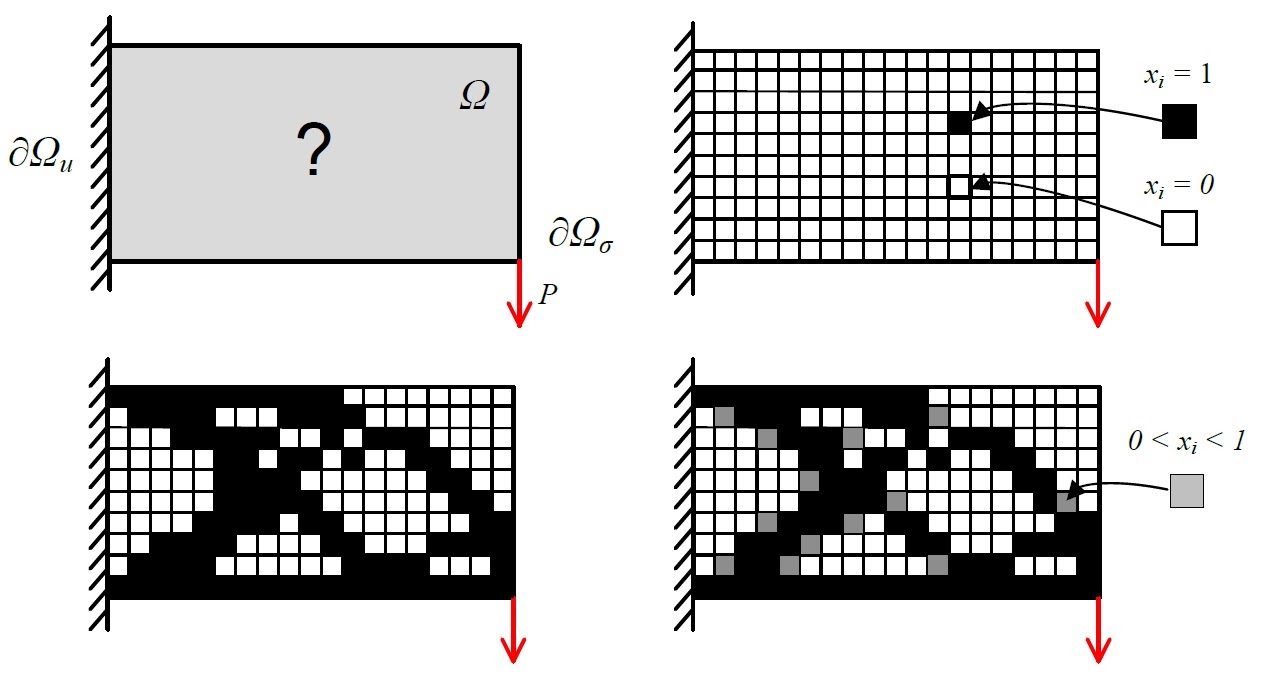
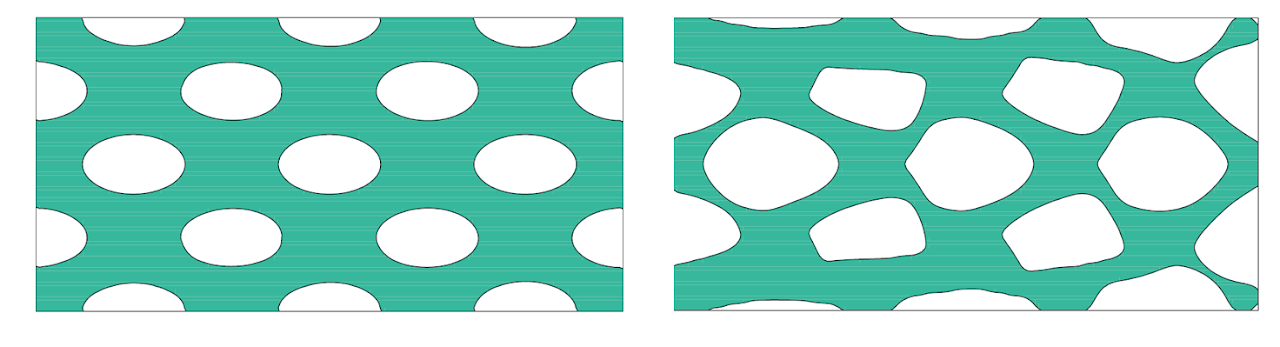
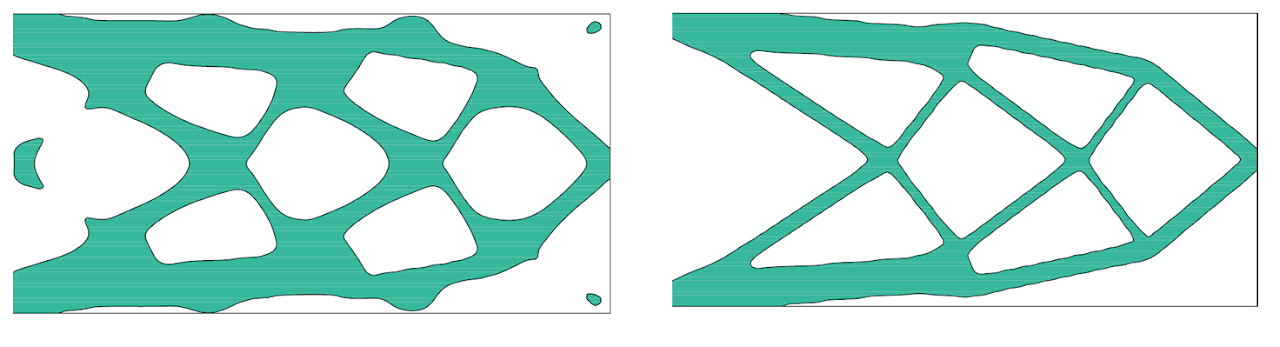
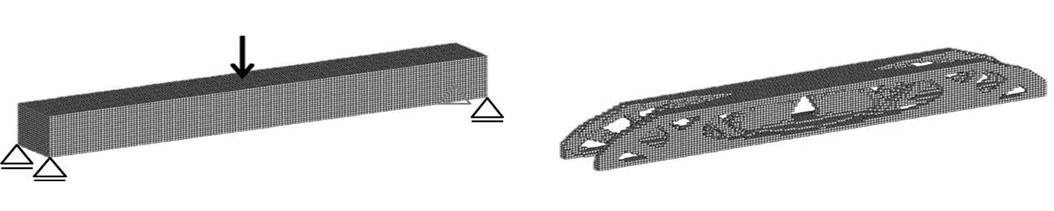
Topology optimization is concerned with determining optimal layout of a specified amount of given materials within a design domain that optimizes the desired performance measures. Performance can be measured in terms of compliance (maximizing stiffness), energy absorption capacity, wave propagation properties, etc.
Areas of interest
- Topology optimization of nonlinear systems.
- Metamaterial designs using topology optimization.
- Multiscale material design using topology optimization.
- Development of novel material systems using additive manufacturing.
- Isogeometric methods in topology optimization.
- Geometric and material nonlinearities in topology optimization.
- Sensitivity analyses of complex nonlinear coupled transient systems.
- Uncertainty quantification in topology optimization.
- Level set methods for topology optimization.
- Dual methods for nonconvex topology optimization.
Videos
Selected Simulation and Optimization Results
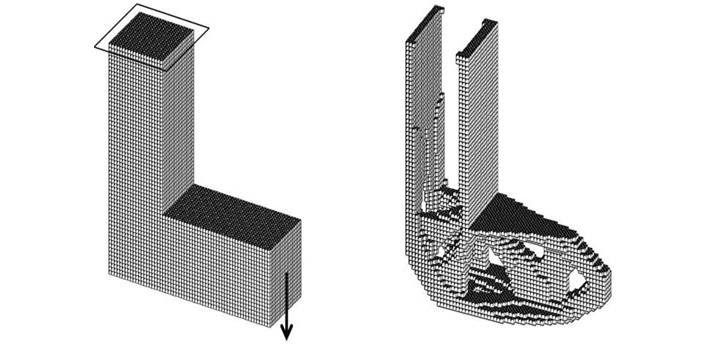
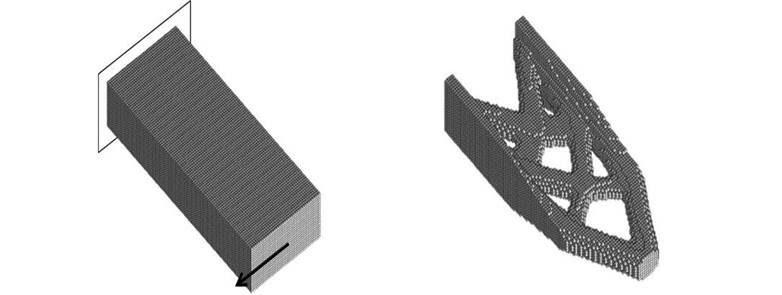
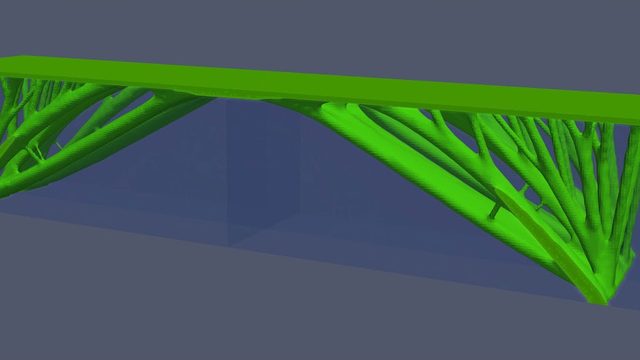
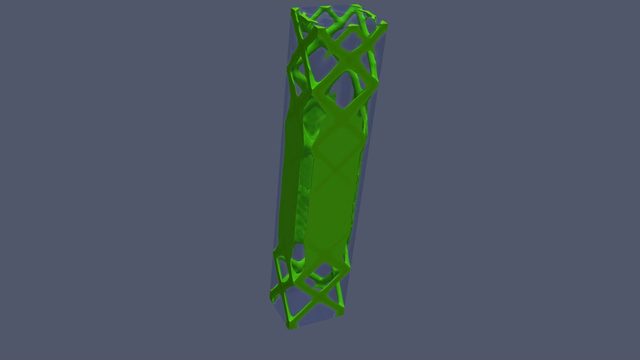
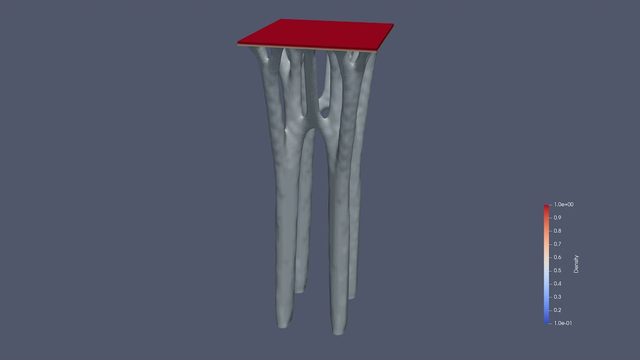
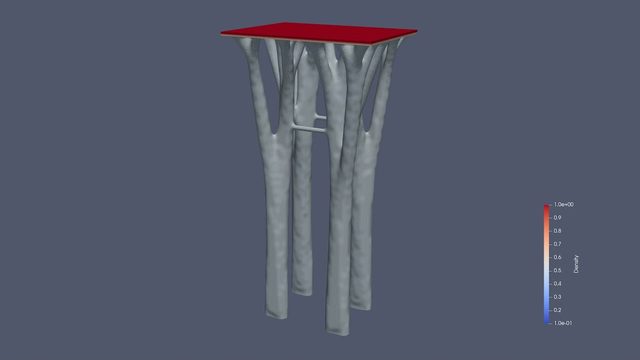
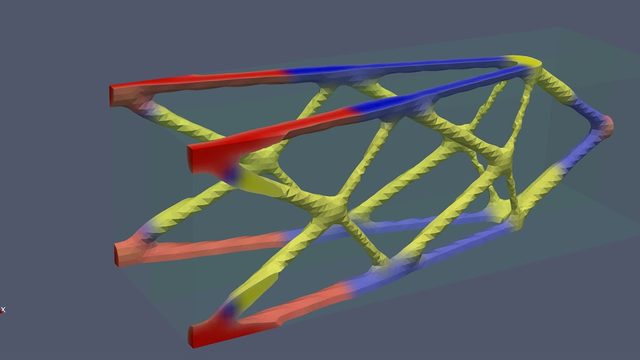
Topology Optimization - 3D Examples (Stream in HD for best results)
Problem Data:
1.26 million DOFs
0.1 Volume fraction
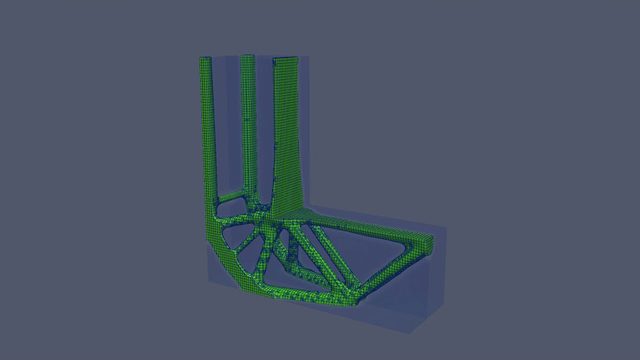
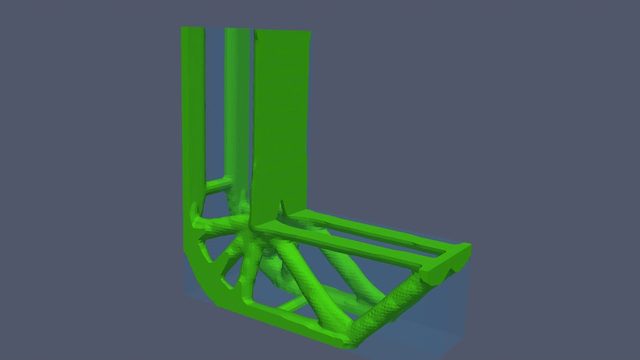
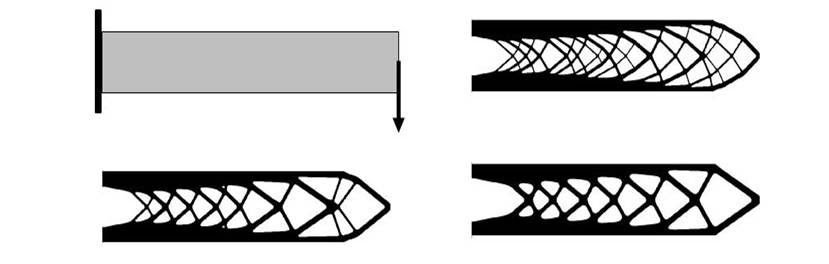
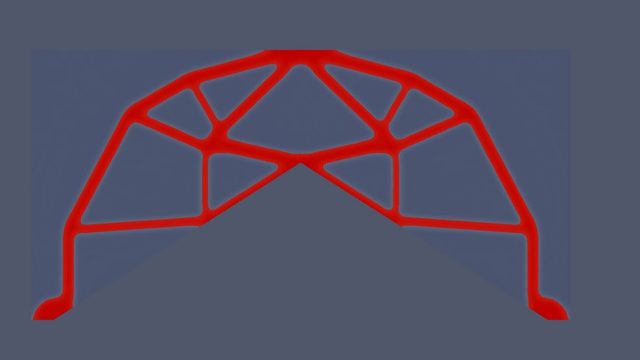
Topology Optimization - 2D Examples (Stream in HD for best results)

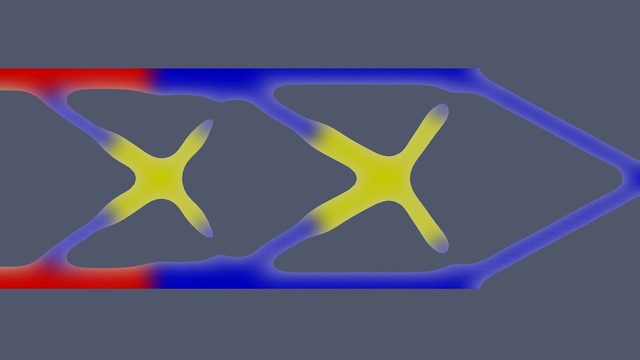
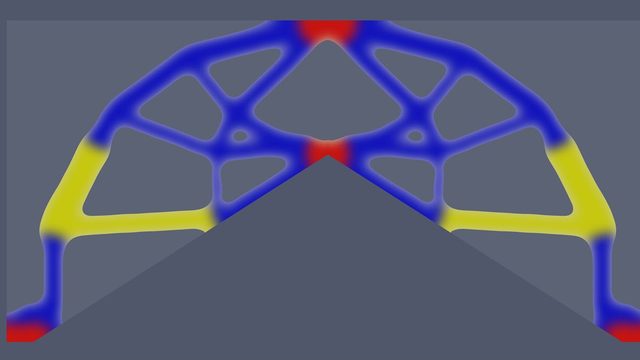
Multimaterial Topology Optimization - 2D/3D Examples
Stiffness: Yellow Phase < Blue Phase < Red Phase
Density: Yellow Phase < Blue Phase < Red Phase
Selected Publications
- Li, L., Zhang, G. and Khandelwal, K. (2017). “Design of Energy Dissipating Elastoplastic Structures under Cyclic Loads using Topology Optimization." Structural and Multidisciplinary Optimization. (DOI)
- Li, L., Zhang, G. and Khandelwal, K. (2017). “Topology Optimization of Energy Absorbing Structures with Maximum Damage Constraint.” International Journal of Numerical Methods in Engineering. (DOI)
- Li, L., Zhang, G. and Khandelwal, K. (2017). “Topology Optimization of Gradient Elastic Material Structures.” Structural and Multidisciplinary Optimization. (DOI)
- Li, L. and Khandelwal, K. (2016). "Topology Optimization of Geometrically Nonlinear Trusses with Spurious Eigenmodes Control." Engineering Structures. (DOI).
- Zhang, G., Li, L. and Khandelwal, K. (2016). "Topology Optimization of Structures with Anisotropic Plastic Materials using Enhanced Assumed Strain Elements." Structural and Multidisciplinary Optimization. (DOI). Read-Cube Link
- Kiran R., Li, L. and Khandelwal, K. (2016). "Complex Perturbation Method for Sensitivity Analysis of Nonlinear Trusses." Journal of Structural Engineering. (DOI).
- Li, L. and Khandelwal, K. (2015). "Topology Optimization of Structures with Length-scale Effects using Elasticity with Microstructure Theory." Computers & Structures. Vol. 157, pg. 165-177. (DOI).
- Li, L. and Khandelwal, K. (2015). "An Adaptive Quadratic Approximation for Structural and Topology Optimization." Computers & Structures, Vol. 151, pg. 130-147. (DOI).
- Li, L. and Khandelwal, K. (2015). "Volume Preserving Projection Filters and Continuation Methods in Topology Optimization." Engineering Structures. Vol 85, pg. 144-161 (DOI).
- Li, L. and Khandelwal, K. (2014). "Two-Point Gradient-Based MMA (TGMMA) Algorithm for Topology Optimization." Computers & Structures, Vol. 131, pg. 34-45. (DOI).
- Tovar, A. and Khandelwal, K. (2013). "Topology optimization for minimum compliance using a control strategy." Engineering Structures, Vol. 48, pg. 674-682.(DOI).